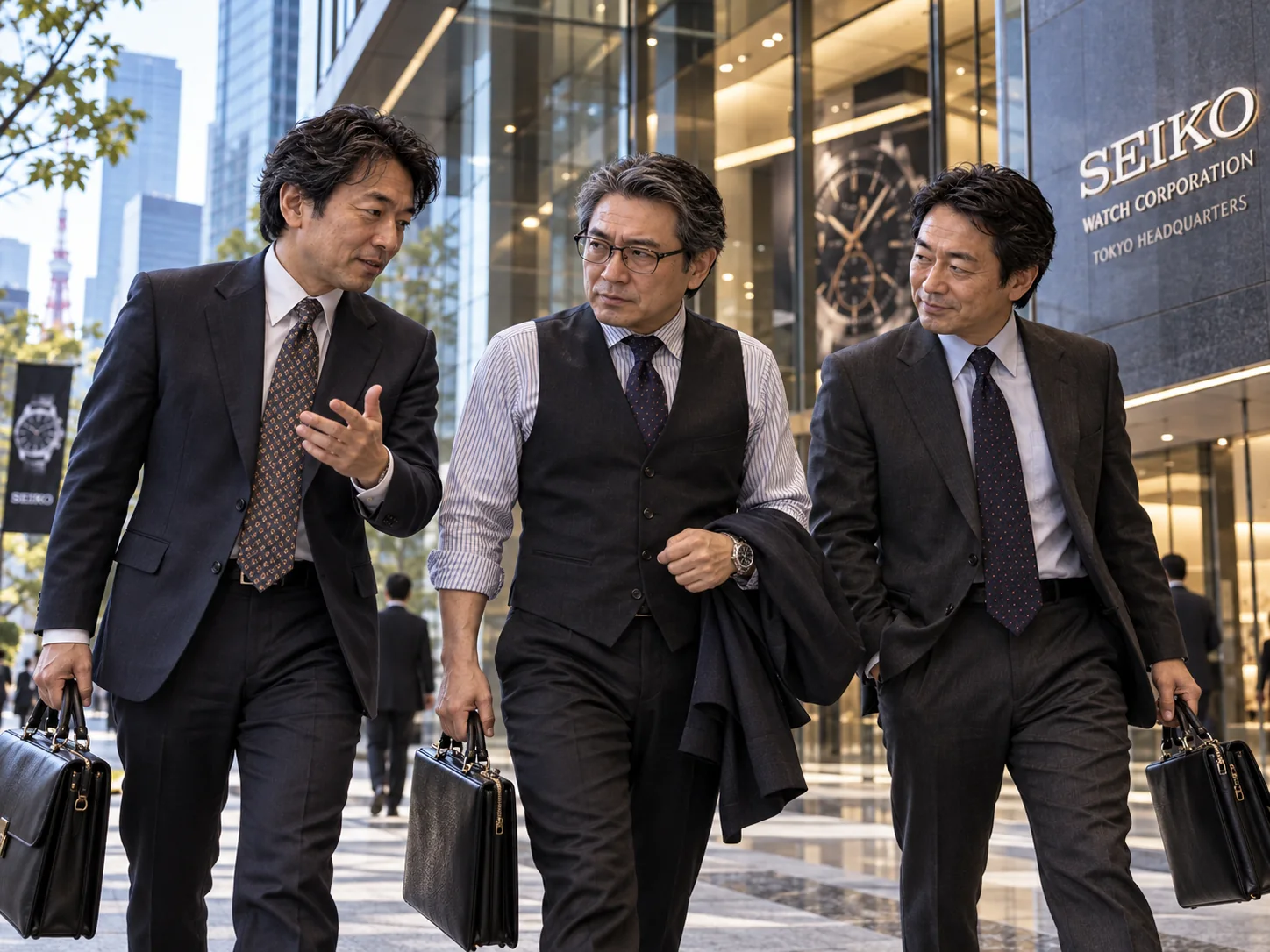
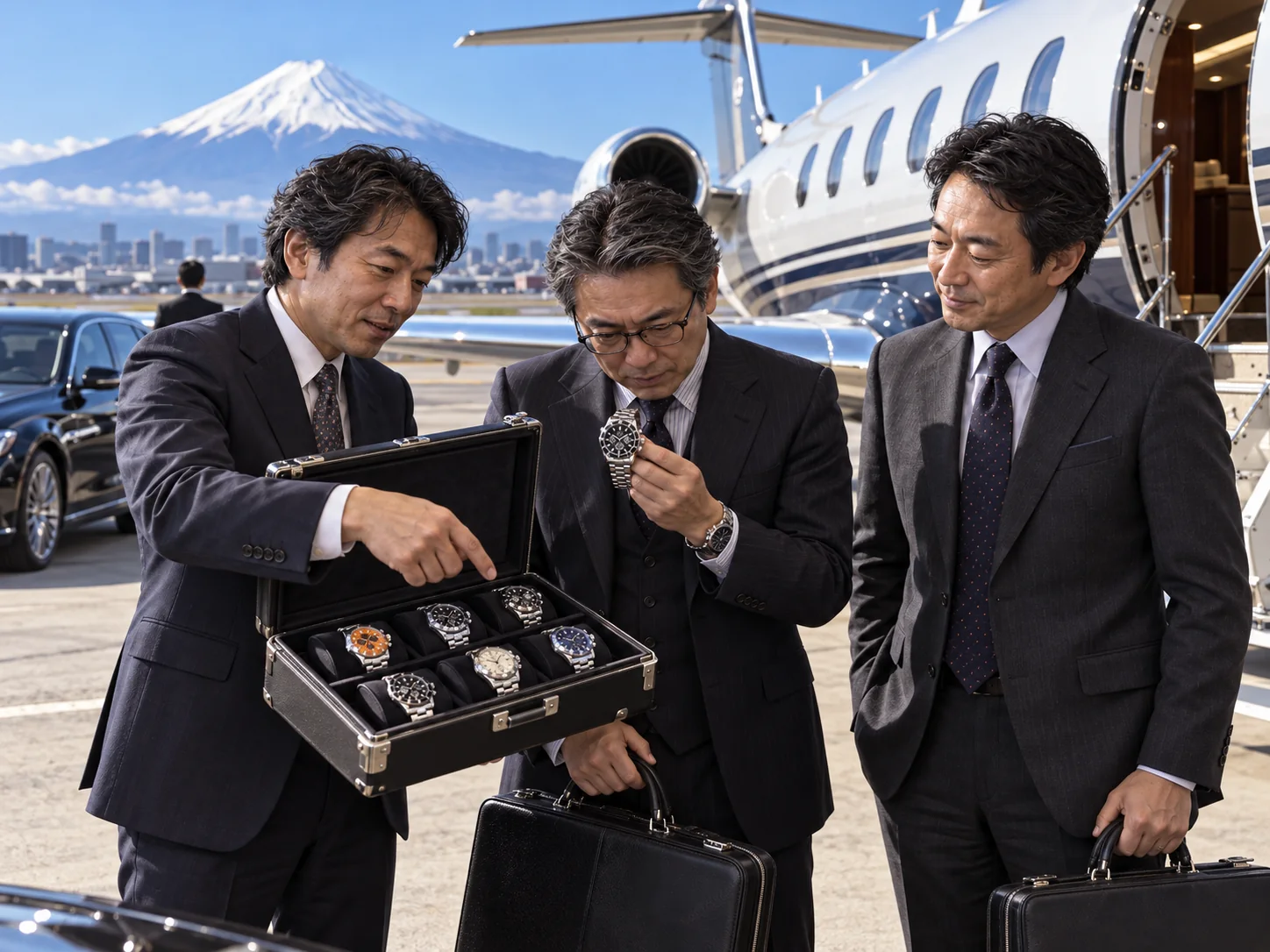
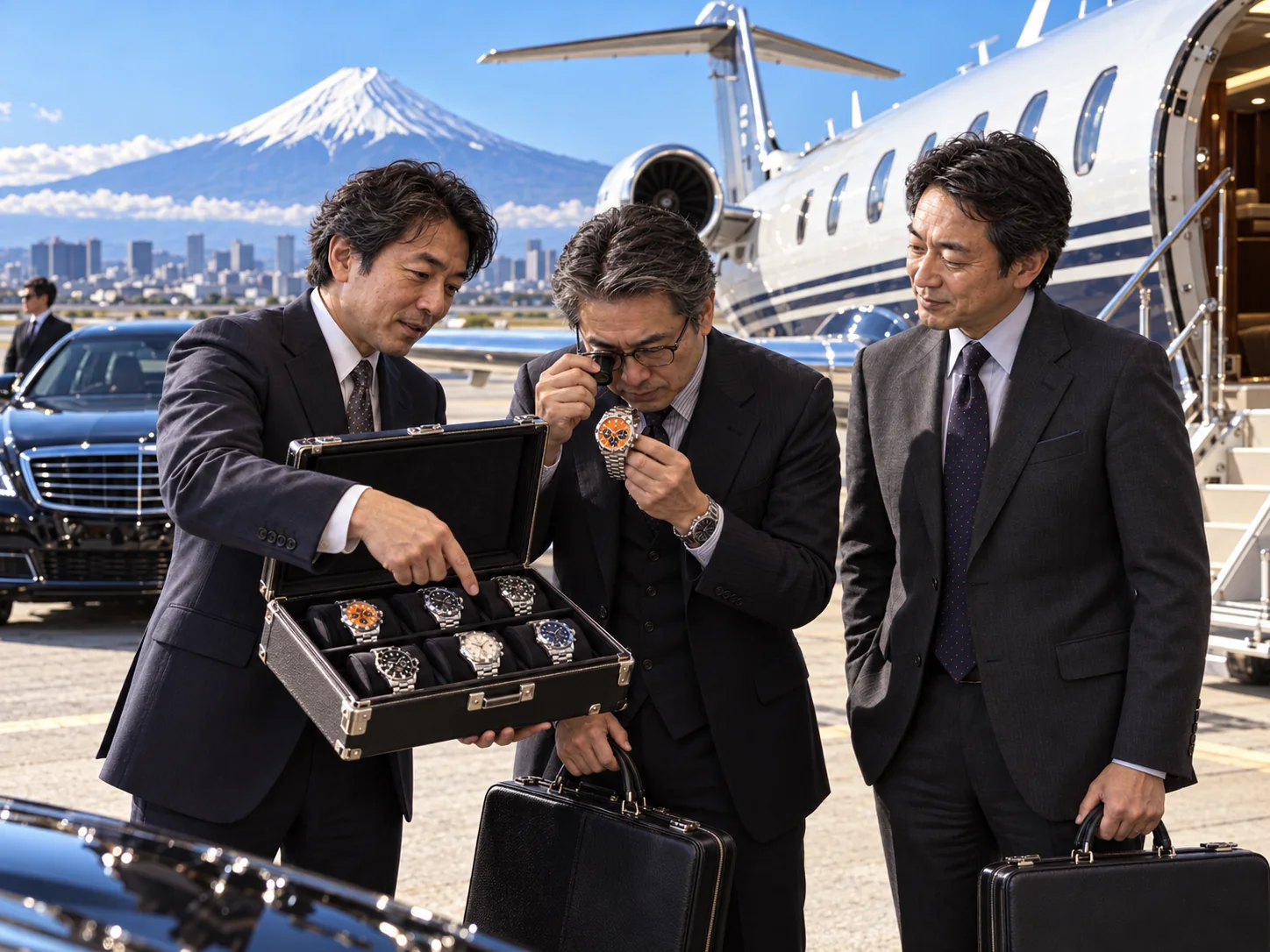
Story-world note: This is fictional Barrel & Coil material, not a claim about a real Japanese trading company.
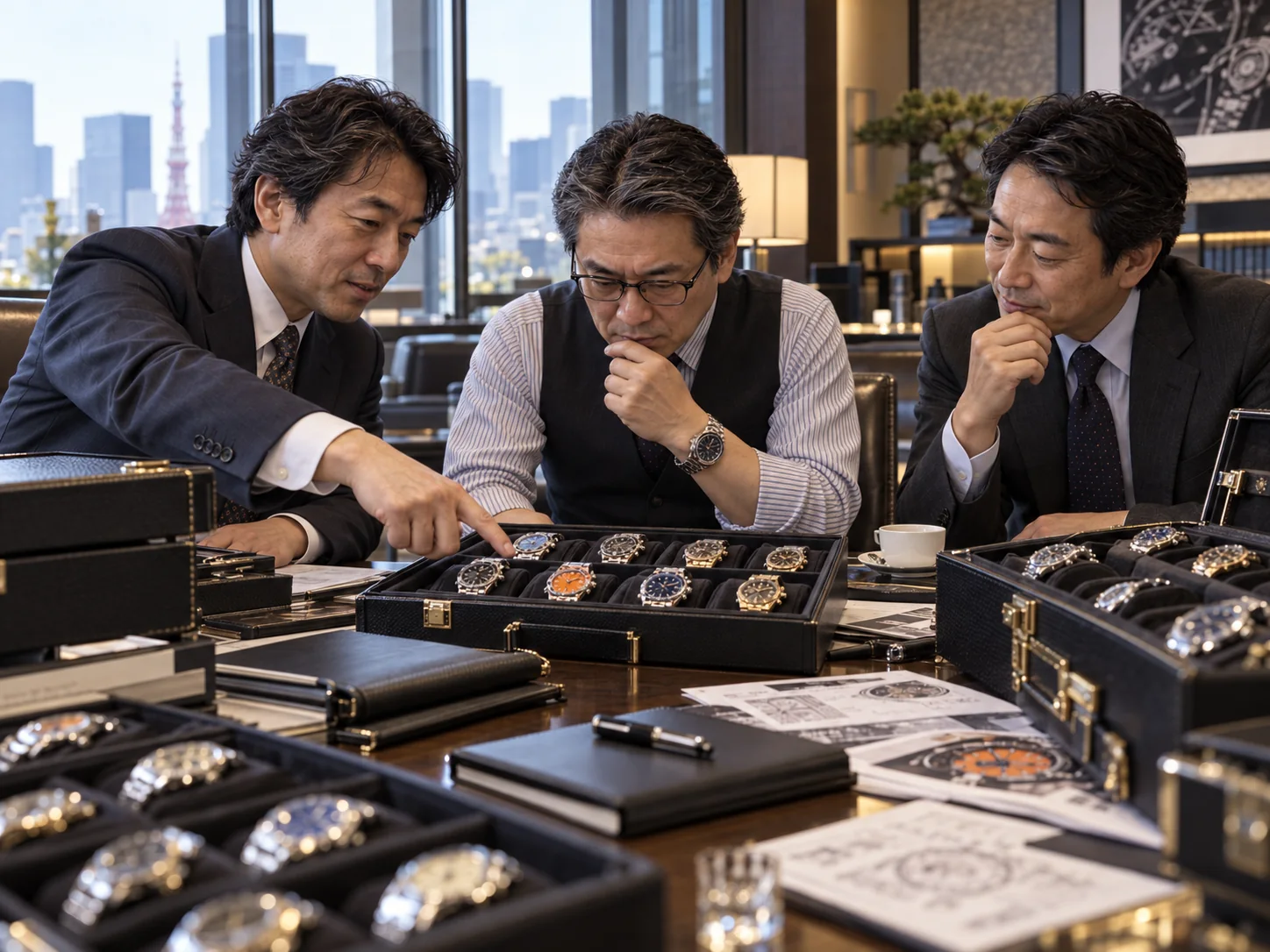
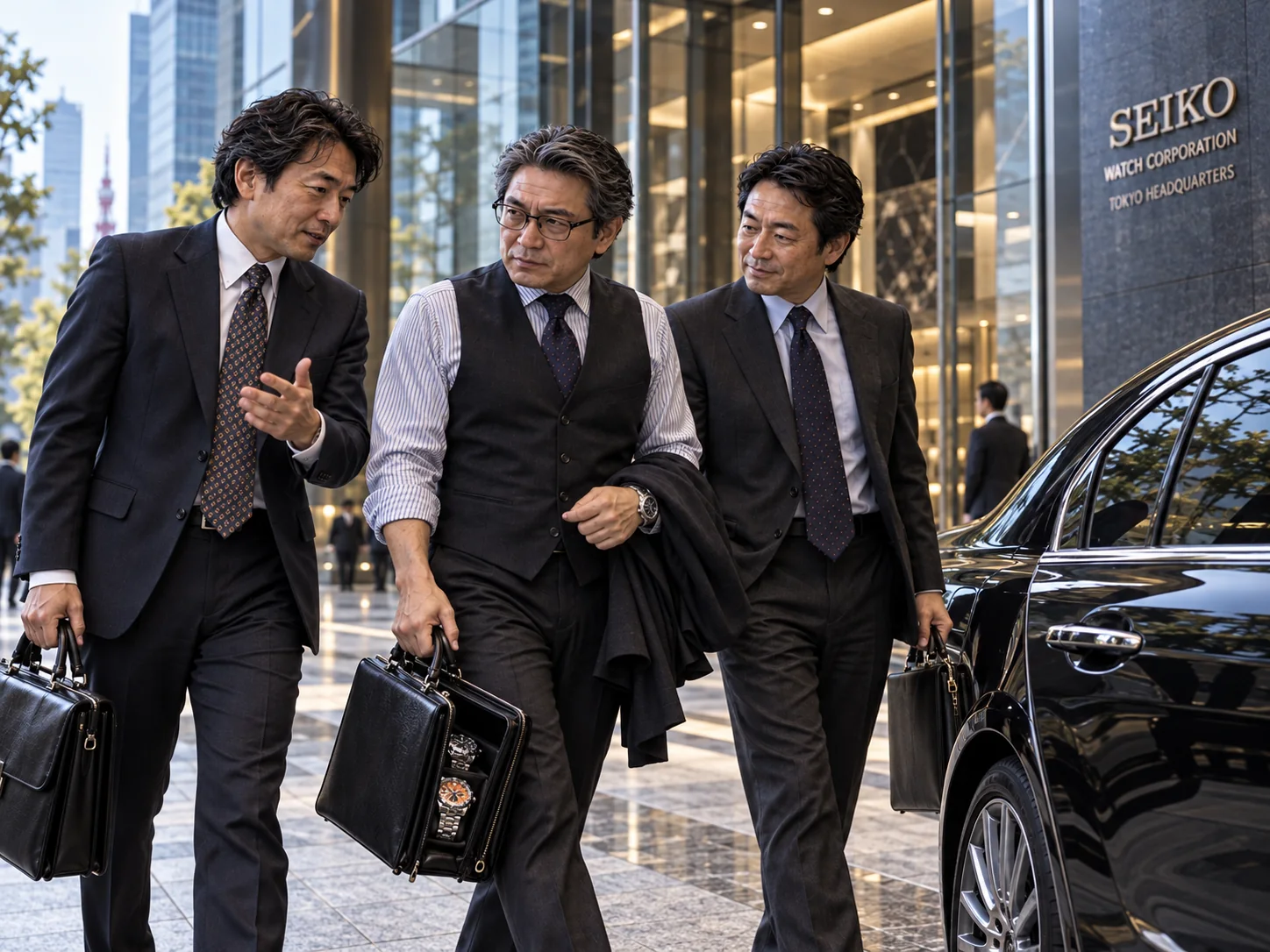
The meeting takes forty-seven seconds.
The first man studies the photograph. The second checks a movement reference. The third has already calculated domestic shipping, the proxy fee, import duty, probable repair cost and resale potential.
“Seiko. Seventies. Crystal wrong.”
“Movement likely good. Dial excellent.”
“Seven thousand five hundred yen.”
“Too much.”
“Seven thousand.”
Three nods.
“Buy.”
From Delaware, an additional message arrives: But I love it.
The three men consider this. It is not a number.
From the auction room to the archive
The photograph that wins an auction is only the beginning. A promising dial can hide an incorrect handset; an immaculate case can conceal a tired movement. The acquisitions desk asks for the caseback, the caliber, the shipping estimate and, whenever possible, evidence of the watch running.
In the fictional desk's international correspondence, the journey may involve Japanese auction listings, a proxy warehouse, a customs form and a package finally opened in Delaware. The comedy lies in the contrast: three men reduce everything to a spreadsheet, while the American correspondent insists that a particular dial has character.
The fourth question
When the watch arrives, the question changes. Not simply “What did it cost?” but “What can we actually document?” Its caseback marks, movement photographs, condition, replacement parts and observed behavior belong in a specimen record. Where evidence ends, the archive says so.
This is the bridge between Japanese Import Watches and Barrel & Coil's proposed Nurse Station accession system. It is a development goal, not a claim that the live systems are already connected.
Explore the research methods ↗ · View a sample inspection ↗
The archive they really want
Underneath the comedy is a genuine ambition: a disciplined reference index where model identities, observed specimen variations and historical evidence can be compared without guessing.
Open the actual reference catalog ↗
Photographic field notes
These scenes belong to the fictional acquisitions narrative. They illustrate the ritual of inspection and travel; they are not primary-source records of watch history.